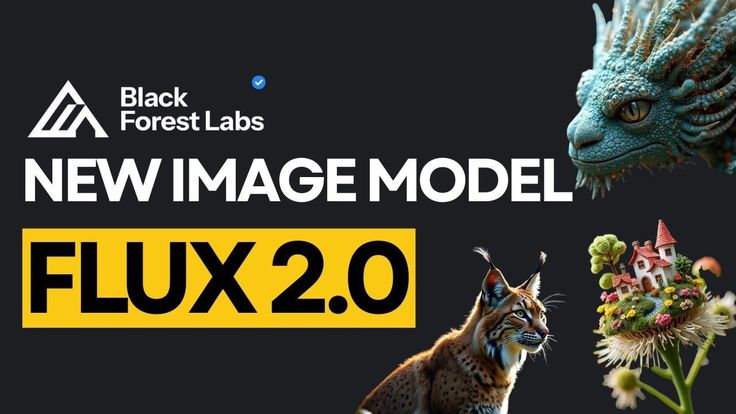
Flux 2.0 Pro: The Surgical Precision Production Tool
Flux 2.0 Pro, released by Black Forest Labs in late 2025 and refined through early 2026, has established itself as the “Engineer’s Choice” for image generation. While Midjourney focuses on artistic flair, Flux 2.0 Pro is built for functional accuracy. It utilizes a massive 32B parameter hybrid architecture (combining a rectified flow transformer with a Mistral-3 vision-language backbone), resulting in a model that understands spatial relationships, physics, and complex instructions better than almost any other tool on the market. It is the go-to for professionals who need an image to look exactly like the prompt, down to the last centimeter of placement.
The Power of “Production-Grade” Consistency
The defining feature of the 2.0 Pro update is the Multi-Reference Control System. Unlike simple image-to-image tools, Flux 2.0 Pro can ingest up to 10 reference images simultaneously. This allows a creator to provide one image for a character’s face, another for their specific outfit, a third for the room’s lighting, and a fourth for a specific product—and the model will synthesize them all into a coherent, photorealistic scene.
For 2026 workflows, this has made Flux 2.0 Pro indispensable for:
-
E-commerce Photography: Placing a specific product into a hundred different lifestyle contexts while maintaining 100% brand accuracy.
-
Architectural Visualization: Handling 3D-aware depth and perspective that older models often warped.
-
UI/UX Prototyping: Rendering legible, complex typography and interface layouts that look like actual screenshots rather than “AI soup.”
Technical Control & API Dominance
Flux 2.0 Pro is designed for integration. Because it is an Open-Weight platform, it has become the backbone of hundreds of third-party apps and enterprise pipelines. It supports a massive 32,000-token context window, meaning you can feed it entire paragraphs of structural requirements—defining every object’s position, the exact HEX color codes for branding, and specific lens settings (e.g., “f/1.8, 85mm”)—and it will follow them with high fidelity.
While it lacks the “opinionated” beauty of Midjourney, its neutrality is its greatest asset for commercial work; it doesn’t force a “style” onto your brand, but rather adopts whatever style you define through your references or LoRAs.
Pros
- Unmatched Anatomy: The 2026 industry leader for rendering perfect hands, fingers, and complex physical poses.
- Multi-Reference Input: Reference up to 10 images to lock in characters, styles, and products simultaneously.
- Brand Accuracy: Direct support for HEX codes and precise logo placement with minimal "drift."
- Legible Typography: Best-in-class text rendering for posters, UI mockups, and signage.
- Speed-to-Quality Ratio: Generates 4MP high-resolution, photorealistic images in under 10 seconds.
Cons
- Aesthetic Neutrality: Can look "flat" or "clinical" without heavy prompting or style references.
- Technical Complexity: To get the best results, you often need to use JSON-based prompt structures.
- Copyright Guardrails: Very strict internal filters that can sometimes block legitimate creative prompts.
- Cost at Scale: While affordable for one-offs, high-volume API usage can become expensive for small startups.
- Limited "Artistic" Intelligence: Unlike Midjourney, it rarely "surprises" you with a better composition than you asked for.
Community Feedback
Loading feedback…